
Art That Makes You Think
My visit to the Centre Pompidou-Metz

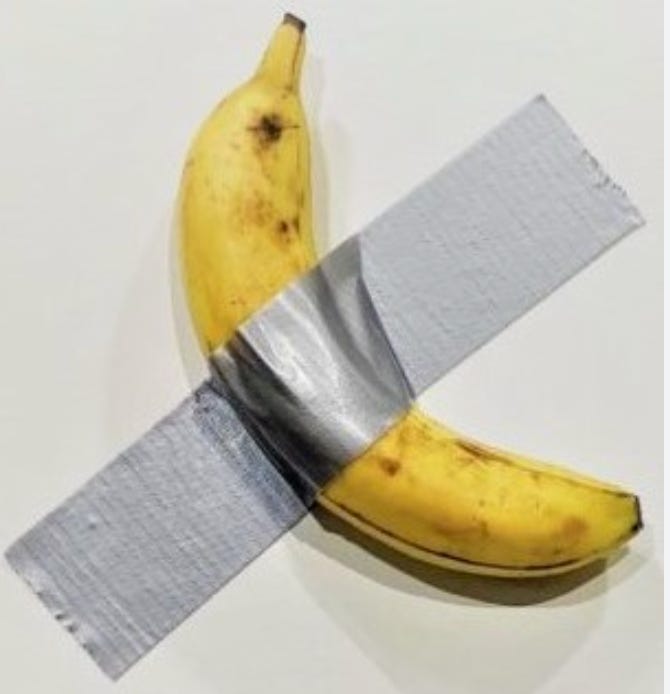
Remember a few years ago when a Chinese crypto-billionaire spent $6.2 million to buy a banana that an artist had duct-taped to a museum wall? When the story broke, I recall thinking that the artist who had made a killing on the banana (which apparently cost him 25 cents) was the kind of person who gave all artists a bad name. Admittedly, I couldn’t have told you the artist’s name. I didn’t read much beyond the headlines, which was sufficient for me to form an opinion, ill-informed and shallow as I now understand it was.
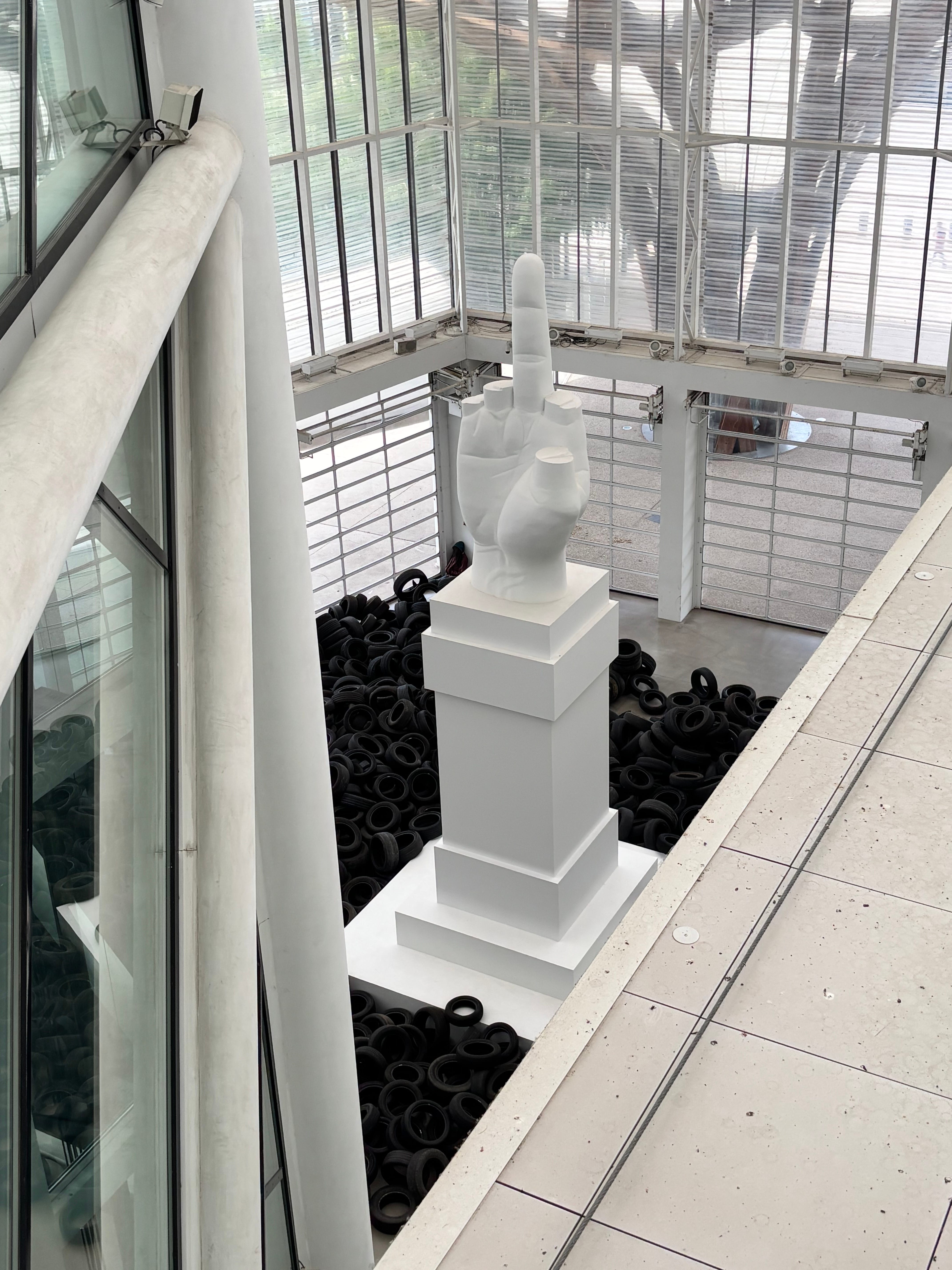
The artist’s name, in case you are, like me, a reactionary Philistine prone to forming ill-informed, shallow opinions, is Maurizio Catellan. Earlier this week I was more than pleasantly surprised to encounter an exhibit that he helped to curate, Endless Sunday, at the Centre Pompidou-Metz in Metz, France.
What, you may be asking yourself, was Debby doing in Metz, France, last week? I can tell you, that wasn’t my plan. My plan, when I decided to tag along on my husband’s work trip to neighboring Luxembourg, was to immerse myself in chocolate tourism. I figured I’d go to Belgium. I’ve never been to Belgium, they have good chocolate, and the country shares a border with Luxembourg.
But there’s a heat wave in Europe. The big cities in Belgium are a minimum three-hour train ride from where we were staying, near the University of Luxembourg. Any chocolate I bought was likely to melt before I got back to our hotel. Also, public transit in Luxembourg is free, as long as you stay in Luxembourg, so I figured I’d stay in Luxembourg.


One of my husband’s colleagues suggested Metz. “It’s in France, so you’ll have to pay for the ticket, but it won’t cost much,” he said. And then, as if he’d been paid by the Metz Ministry of Tourism, he added, “There’s an 11th-century cathedral with windows by Marc Chagall, and you should visit the museum, the Centre Pompidou-Metz. And there are lots of nice shops. And it’s only about an hour away.”


He was right about all of it, but the highlight of my day was the Centre Pompidou-Metz, a three-story structure shaped like a Chinese hat (apparently one of the architects was inspired by a Chinese hat he’d bought in Paris).
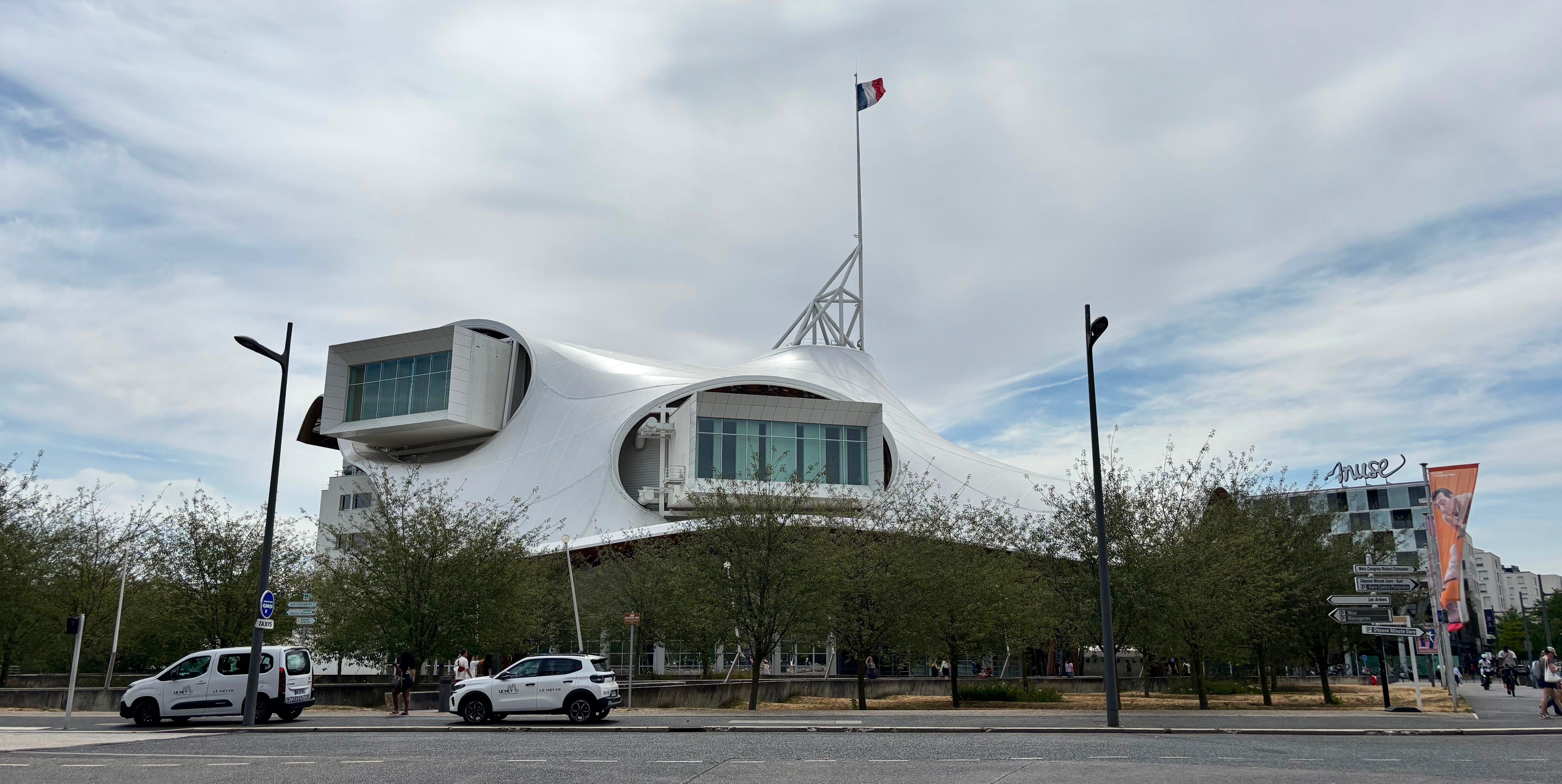
The whimsical design is one reason the Pompidou doesn’t feel overwhelming the way bigger museums in bigger cities often do. Inside, there are three floors of display space, in addition to a soaring atrium and a sculpture garden. There were three excellent displays—one featuring the works of sculptor Louise Nevelson, and another focused on François Morellet, whose work is similar to that of one of my favorite artists, Piet Mondrian. But Cattelan’s did what the best art does: it got me to think, and to think differently.


I had no idea what I was stumbling into when I entered the museum—but I like museums and it was too hot to spend much time outdoors. At first I had trouble understanding the theme of the Endless Sunday exhibit, but the more time I spent taking in the installations—which were on the walls, the floors, and hanging from the ceilings—the more sense it made. As explained in the handouts and on the museum’s website, the exhibit is designed to make you think about the nature of Sundays while “immersing visitors in the complex, tortured world of Maurizio Cattelan, who takes them on a historical and sensorial journey.”


There’s no question that the exhibit benefitted from being able to borrow pretty much any art it wanted from its more established sibling museum, the Centre Pompidou in Paris, which is closed for renovations. That meant that among the hundreds of pieces in the exhibit was art by luminaries including Roy Lichtenstein and Pablo Picasso, along with Cattelan’s truly provocative work.
His art did what art is supposed to do: it got me to think about things differently. Four pieces in particular did this: a Pinocchio figurine suspended from a ceiling, a giant Felix the Cat skeleton (which was such a surprise that it took me a minute to realize that it wasn’t a dinosaur), a lifesized image of three teenage boys hanging (which I immediately turned away from, as it was far too triggering) and five horses mounted high up on a wall with everything except for their heads visible.
The horses made such a profound impression on me that after I’d been through the entire first floor, I went back to study the installation and reflect on Cattelan’s perspective about mounting trophy heads on walls. He thinks it’s absurd. I understand, but I hadn’t contemplated that perspective deeply in a very long time, because people I know and love (including my mother’s only brother and my father-in-law) were hunters who had plenty of trophy heads mounted on their walls. I grew up not questioning the practice.
My two adult children and my niece, who are 30, 28, and 26 and living in their own homes, have taken some of their grandfather’s trophy heads for their walls. On Halloween, my daughter put a witch hat on her mountain goat. At Christmas, she swapped it out for a Santa hat. I fully expect that some people reading this are going to be appalled and may make nasty comments about violating animal rights, or at least think nasty thoughts about the people I love (who also, by the way, love animals: my father-in-law is a retired wildlife biologist).
I understand. We contain multitudes. If nothing else, that’s the message I took from Endless Sunday.


Wow, I have never heard of that museum or the Chagall windows. Amazing that a church would commission those. Very refreshing.